#14 No business can survive on a few sultry hours of service.
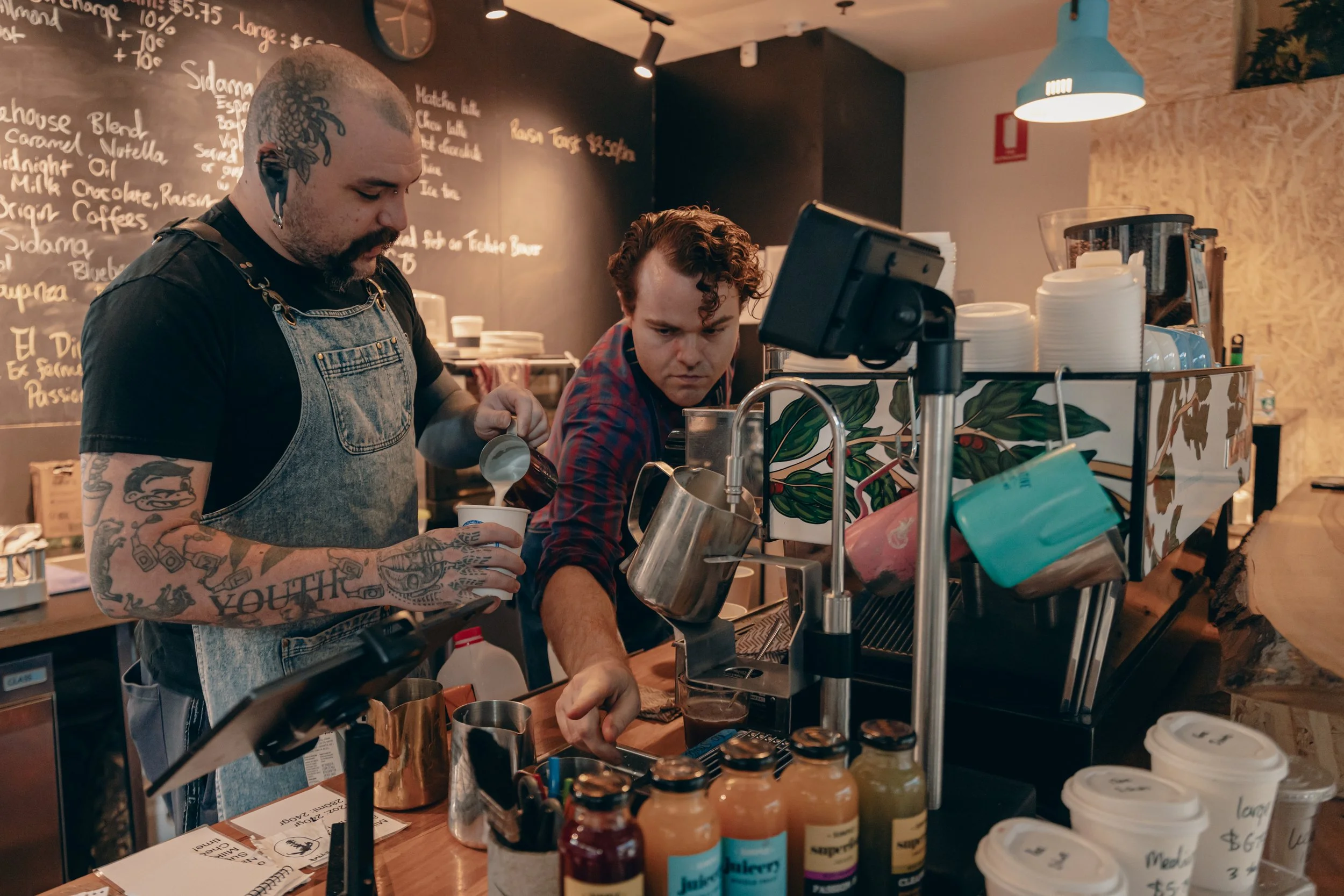
It's getting ridiculous how many places are deserted all week, for a handful of hours of pump on the weekend.
I put it to the disbelievers – when was the last time you saw a cafe pumping on a Tuesday?
We've all heard it – “the cafe on the corner was absolutely heaving this morning!” When you work behind the counter, this is often said as they purchase something from you: “I came here because the other one was too slow.”
Okay, I get it. Sometimes it's just not worth the wait.
However I have to say, the cafe game right now has got a real problem with volume. We cannot be an industry of weekend warriors. The very same cafes that are looking like a street festival at 10.00am on Saturday, are the ones completely empty on a Tuesday at the exact same time. A hundred seats that fill up in the space of twenty minutes, bereft of patrons the rest of the week.
I've watched this problem aggrandise itself over the years. About ten years ago, the Australian cafe scene had three really huge days: Friday, Saturday and Sunday. As more and more cafes opened, this reduced. COVID, while getting a lot of operators to close up shop, also signalled a lifestyle change for some corporate types. So, we ended up with a fresh batch of hopefuls, filling the leases of the recently deceased business ventures. This max capacity of cafes has meant we have twenty cafes with two tables occupied out of sixteen, instead of two cafes with every table full all week. This creep has slowly reduced busy weekends to busy hours; busy days to busy shifts.
Here's the thing- we can't be busy all the time. I get it. But, we also can't be busy one day out of seven. We can't do an average, and then exceed that number by 30% for an hour, and expect to keep 50% more staff around on the off chance that this mythical hour appears.
Staffing is a huge part of this. To be frank, so many cafes in Brisbane can be run with nothing more than two people from Monday to Friday. Sometimes, this number even includes a chef who can comfortably keep up with a handful of meals all day. Meanwhile the same cafe needs upwards of five staff Saturday to accommodate a full house. Five staff for what is realistically an hour of pump on Sunday.
I think it's important to see these numbers as percents. This better demonstrates the precariousness of the situation. 50% more staff for 28% of the week? But, even this doesn't demonstrate the situation fully. Assuming 6.30am-1.30pm trading hours, seven days (total 49 hours operating) and assuming 9am-11am Saturday is manic, and 9am-11am Sunday – that's an appalling 50% more staff for 4% of the hours!
Staff are people too, and cafes often find themselves 'giving away shifts' to keep people they need employed. While the extra people are only needed twice a week, they are engaged to polish glasses for long periods across the week, pushing staffing costs further.
Base rate of inflation in Australia '26 was 3.96%, wage increase last year was 3.4%. To use one example, NSW Government reports Egg Price index up 8% on year '26 and averaging 15% rise, year on year. So, with these numbers alone, we can see wholesale pricing of the products you are actually selling, even in those busy periods, is far outstripping any increase in price. Wages having moved up by the aforesaid 3.4% , not including the penalty rates put on for weekend work. If our weekends are the only time we are needing all these staff, our pricing needs to encapsulate that more fully. Frankly, bacon and eggs on sourdough should be priced at $60 a serve to accommodate this. But, we are at the mercy of a legacy price point. What patrons are prepared to pay for these items to more built around cultural norms and not cost of goods circa 2026.
Forget the weekends, folks. We need to build a model of products and service that can pay its way all the time. Or, Australian consumers will need to get used to longer waits and slower turnarounds at peak times.